
In the culinary landscape of Bali, where upscale restaurants and trendy cafes compete for attention, there exists a more humble yet profoundly authentic dining experience that captures the true essence of Balinese life: the warung. These small, family-owned eateries are the heartbeat of local food culture, serving traditional dishes at affordable prices in unpretentious settings. For travelers seeking to connect with the real Bali, to taste genuine home-cooked flavors, and to experience the warmth of Balinese hospitality, dining at a warung is not just recommended—it’s essential.
What is a Warung?
The term warung (sometimes spelled waroeng) refers to a small, family-owned business in Indonesia, which can range from a tiny roadside stall to a modest restaurant. In the context of dining, a warung is typically a simple eatery, often operating from the front of a family home or a basic structure with minimal seating. The atmosphere is casual and welcoming, with plastic chairs, simple tables, and an open-air setting being the norm.
Warungs are an integral part of Indonesian daily life, serving as community gathering places where locals come for affordable meals, conversation, and a sense of belonging. They are found in every corner of Bali, from bustling towns to remote villages, and each one has its own character, specialties, and loyal following.
The Warung Experience: What to Expect
Dining at a warung is a distinctly different experience from eating at a tourist-oriented restaurant. It’s more informal, more authentic, and often more rewarding. Here’s what you can typically expect:
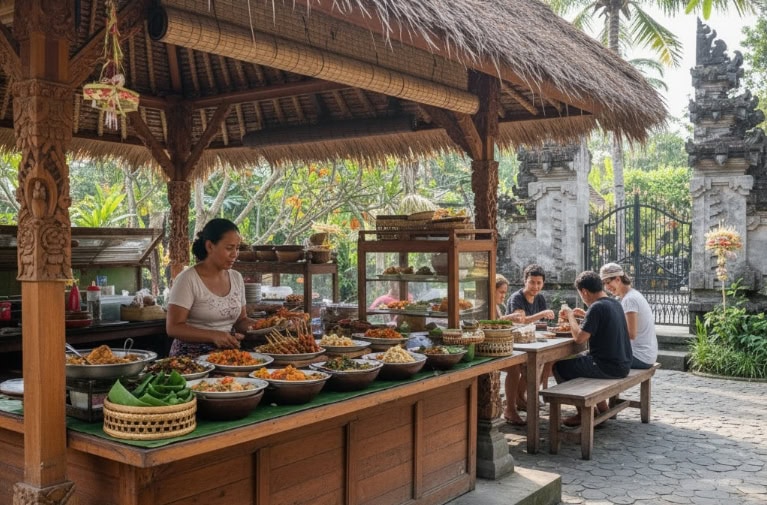
Simple Setting: Warungs are not about fancy decor or Instagram-worthy interiors. The focus is purely on the food and the experience. You’ll find basic furniture, sometimes just a few tables under a thatched roof or an open-sided structure. Some warungs are so small that they only have a counter and a few stools.
Home-Cooked Flavors: The food at warungs is often prepared using family recipes passed down through generations. The dishes are cooked fresh daily, using local ingredients and traditional methods. This means you’re tasting authentic Balinese cuisine as it’s meant to be, not a watered-down version adapted for Western palates.
Affordable Prices: One of the most appealing aspects of warungs is their affordability. A full meal, including rice, a main dish, vegetables, and a drink, can cost as little as 20,000 to 40,000 Indonesian Rupiah (approximately $1.50 to $3 USD), making it accessible to everyone.
Nasi Campur Display: Many warungs operate on a nasi campur system, where you’ll see a display of various pre-cooked dishes laid out in trays or pots. You point to what you want, and it’s served on a plate with rice. This is a great way to try multiple dishes and see exactly what you’re getting.
Limited English: While some warungs in tourist areas may have English-speaking staff, many do not. This is part of the authentic experience. Don’t be intimidated—pointing, smiling, and a few basic Indonesian words go a long way. The staff are usually friendly and patient.
Cash Only: Most warungs operate on a cash-only basis, so make sure to carry small denominations of Indonesian Rupiah.
Must-Try Dishes at Balinese Warungs
While menus vary, certain dishes are staples at most Balinese warungs:
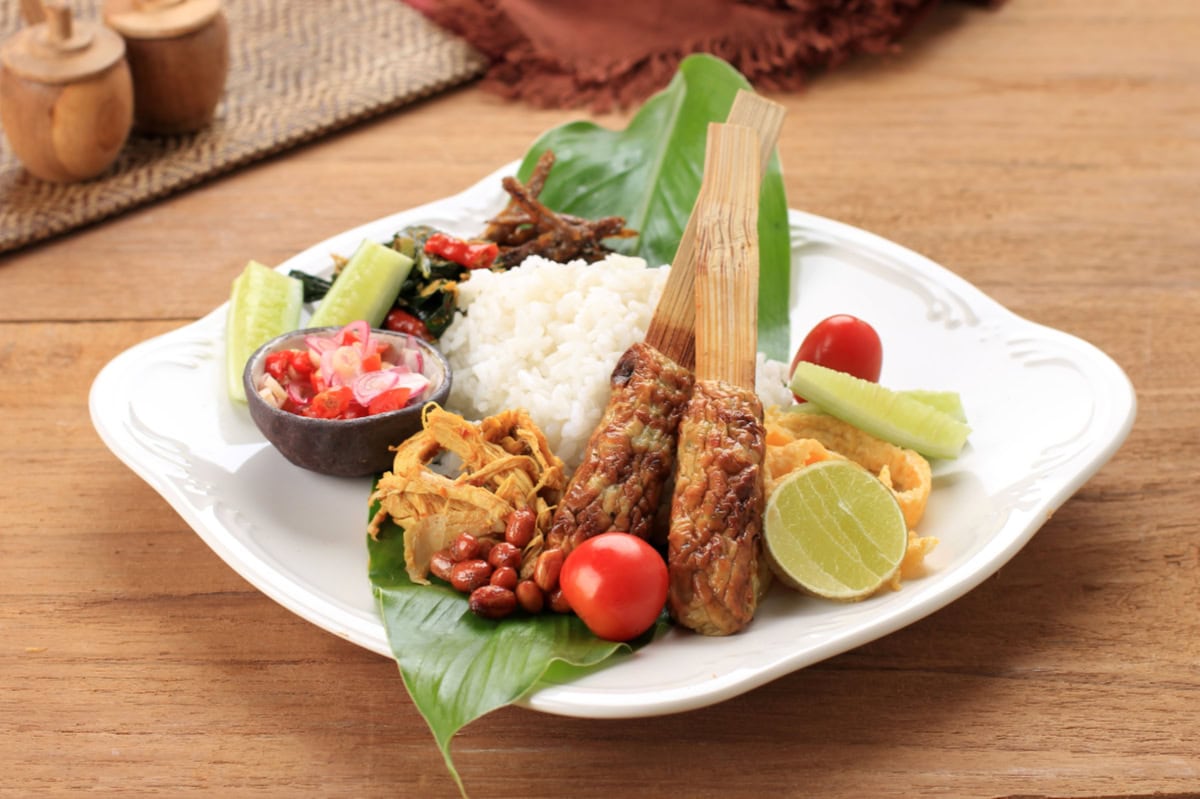
Nasi Campur (mixed rice) is the quintessential warung meal, consisting of steamed white rice accompanied by a selection of side dishes such as grilled chicken or fish, sate lilit (minced fish satay), lawar (mixed vegetable salad), tempe, tofu, and sambal. It’s a complete and satisfying meal that showcases the variety of Balinese flavors.
Nasi Goreng (fried rice) is Indonesia’s beloved comfort food, stir-fried with sweet soy sauce, garlic, shallots, and often topped with a fried egg. It’s simple, flavorful, and universally loved.
Mie Goreng (fried noodles) is the noodle version of nasi goreng, equally delicious and satisfying.
Soto Ayam is a fragrant chicken soup with turmeric, lemongrass, and spices, served with rice or noodles. It’s a comforting and nourishing dish, perfect for any time of day.
Gado-Gado is a vegetarian-friendly salad of blanched vegetables, tofu, tempeh, and hard-boiled eggs, all topped with a rich peanut sauce.
Babi Guling (roasted suckling pig) is a Balinese specialty that some warungs serve, especially those specializing in this dish. It’s a must-try for meat lovers.
Sate Lilit is a unique Balinese satay made from minced fish or chicken mixed with grated coconut, coconut milk, and a rich blend of spices, then wrapped around bamboo or lemongrass sticks and grilled.
Finding the Best Warungs
The best warungs are often those frequented by locals, which is a good indicator of quality and authenticity. Here are some tips for finding great warungs:
Follow the Locals: If you see a warung packed with Balinese people, especially during meal times, it’s a good sign that the food is delicious and affordable.
Ask for Recommendations: Don’t hesitate to ask your hotel staff, tour guides, or friendly locals for their favorite warung recommendations. They’ll often point you to hidden gems that tourists rarely find.
Explore Beyond Tourist Areas: While there are good warungs in popular tourist spots, venturing into residential neighborhoods or smaller villages will often lead you to more authentic and affordable options.
Look for Cleanliness: While warungs are simple, observe basic hygiene. A clean cooking area and fresh-looking food are good indicators.
Be Adventurous: Don’t be afraid to try dishes you’re unfamiliar with. Part of the warung experience is discovering new flavors and expanding your culinary horizons.
Warung Etiquette and Tips
Greet with a Smile: A friendly “Selamat pagi” (good morning), “Selamat siang” (good afternoon), or “Selamat malam” (good evening) goes a long way.
Point and Choose: If you’re unsure what to order, simply point to the dishes that look appealing in the nasi campur display.
Adjust Spice Levels: If you’re sensitive to spice, you can ask for “kurang pedas” (less spicy) or “tidak pedas” (not spicy). Sambal is usually served on the side, so you can control the heat level.
Eat with Your Right Hand: In Indonesian culture, the right hand is used for eating, while the left is considered unclean. If you’re eating with your hands (which is common for certain dishes), use only your right hand.
Say Thank You: “Terima kasih” (thank you) is always appreciated.
Be Patient: Service may be slower than in Western restaurants, especially during busy times. Relax and enjoy the laid-back pace.
The Heart of Balinese Hospitality
Dining at a warung is more than just eating a meal; it’s an opportunity to connect with the local community, to experience genuine Balinese hospitality, and to support small, family-run businesses. The warmth and friendliness you’ll encounter at warungs are often the most memorable aspects of the experience. The owners take pride in their food and are often happy to chat, share stories, and make you feel like part of the family.
In a world where travel is increasingly homogenized, warungs offer a refreshing and authentic alternative. They are a reminder that the best travel experiences are often the simplest ones, rooted in local culture and genuine human connection. So, step away from the tourist trail, seek out a local warung, and savor the true flavors of Bali. Your taste buds—and your travel memories—will thank you.