
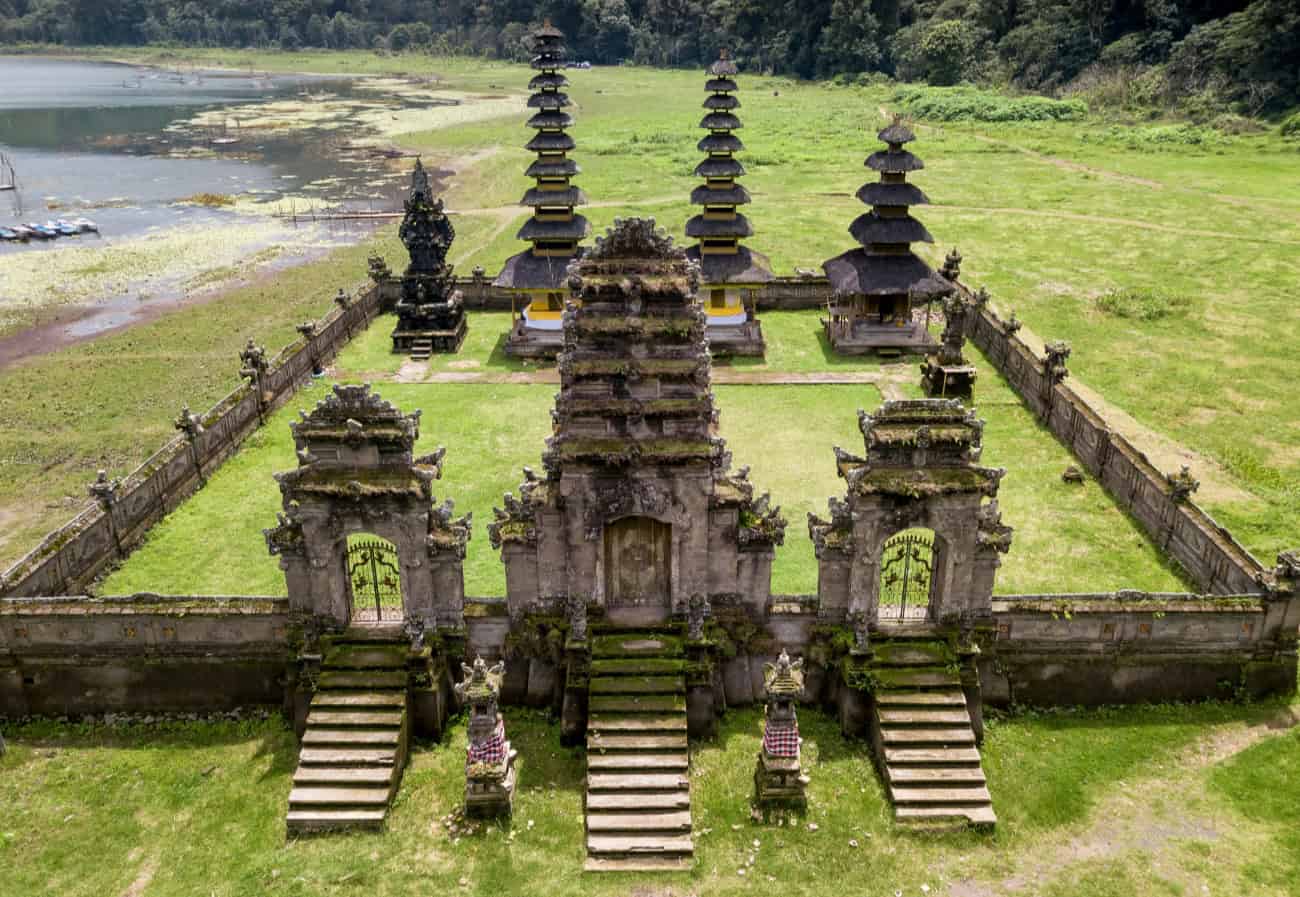
Balinese architecture is a profound expression of the island’s spiritual beliefs, deeply rooted in the Hindu-Dharma philosophy of Tri Hita Karana – the harmonious relationship between God, humans, and nature. More than just a style of building, it is a sacred art form that meticulously integrates cosmological principles, local wisdom, and natural materials to create spaces that are not only aesthetically beautiful but also spiritually resonant. From the grand temples to the humble family compounds, every structure in Bali tells a story of balance, respect, and devotion.
The Guiding Principles: Asta Kosala Kosali
At the heart of Balinese architectural design lies Asta Kosala Kosali, an ancient set of guidelines and rules derived from sacred texts. These principles dictate everything from the orientation of buildings to the dimensions of rooms and the placement of gates, ensuring that structures are in harmony with the natural environment and cosmic forces. Key aspects include:
- Orientation: Buildings are typically oriented towards Mount Agung, the island’s most sacred volcano, considered the abode of the gods. The head of the compound (the most sacred area) faces the mountain, while the feet (the least sacred, often where waste is disposed) face the sea.
- Spatial Division: The land and buildings are divided into sacred, human, and profane zones, reflecting the Tri Hita Karana philosophy. For instance, a family compound will have a temple area (sacred), living quarters (human), and a kitchen/waste area (profane).
- Proportionality: Dimensions are often based on human measurements, ensuring a harmonious scale. The size and placement of elements are carefully calculated to achieve balance and aesthetic appeal.
- Natural Materials: Balinese architecture predominantly uses locally sourced natural materials such as wood (teak, jackfruit, coconut), bamboo, stone (volcanic rock, sandstone), and thatch (alang-alang grass). These materials are chosen not only for their durability and beauty but also for their connection to the earth.
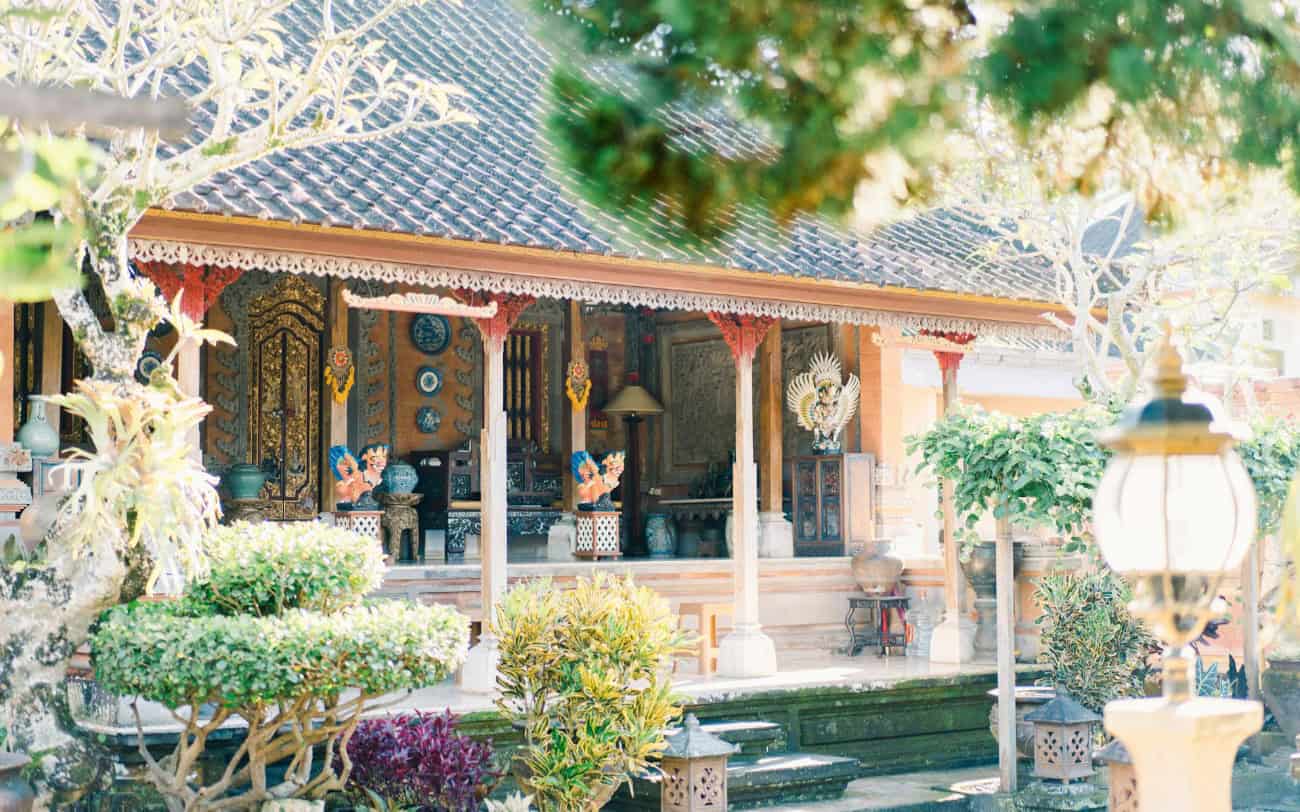
The Balinese Family Compound: A Microcosm of the Cosmos
Unlike Western homes, a traditional Balinese family compound is not a single building but a collection of separate pavilions, each with a specific function, enclosed within a high wall. This layout reflects the communal nature of Balinese family life and the need for distinct spaces for different activities. Typical structures within a compound include:
- Bale Dangin / Bale Gede: An open pavilion used for ceremonies and receiving guests.
- Bale Dauh: A pavilion for sleeping, often located to the west.
- Paon: The kitchen, usually located in the less sacred, seaward direction.
- Lumbung / Jineng: A rice barn, often elevated on stilts, symbolizing prosperity.
- Pura Keluarga (Family Temple): The most sacred part of the compound, dedicated to ancestral spirits and deities, always oriented towards Mount Agung.
- Angkul-angkul / Candi Bentar: The main entrance gate, often split into two halves, symbolizing the duality of the universe.
The entire compound is designed to be a self-sufficient unit, reflecting the close-knit family and community ties that are central to Balinese society.
Temples: Gateways to the Divine
Balinese temples (pura) are the epitome of the island’s architectural grandeur and spiritual devotion. Each temple is a complex of courtyards, shrines, and pavilions, meticulously designed according to Asta Kosala Kosali. They are adorned with intricate carvings of gods, demons, mythical creatures, and floral motifs, all serving to tell stories from Hindu epics and local folklore.
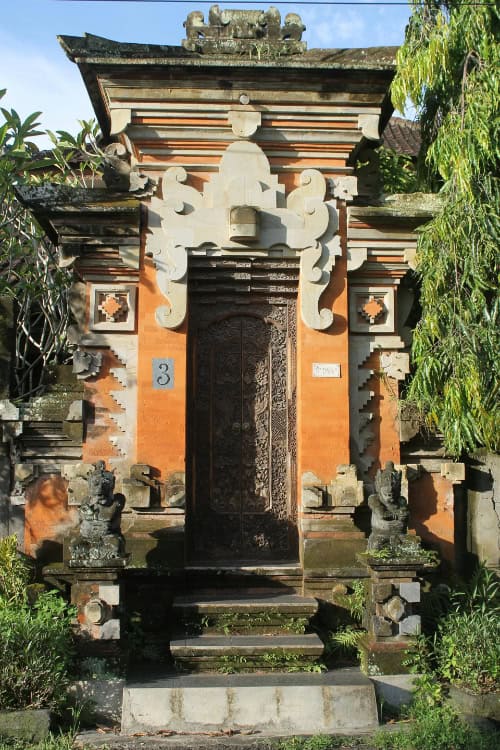
Key features of Balinese temple architecture include:
- Candi Bentar (Split Gate): A towering, split gateway that marks the entrance to the outer courtyard, symbolizing the cosmic mountain split into two, representing duality.
- Paduraksa (Capped Gate): A roofed gateway that leads to the inner, more sacred courtyards, often adorned with fierce guardian figures.
- Meru: Multi-tiered shrines with pagoda-like roofs, symbolizing Mount Meru, the abode of the gods. The number of tiers (usually odd, from 3 to 11) indicates the deity to whom the shrine is dedicated.
- Bale Kulkul: A drum tower housing a wooden slit drum (kulkul) used to summon villagers for ceremonies or emergencies.
These temples are not just places of worship but also vibrant centers of community life, hosting elaborate ceremonies, dance performances, and festivals throughout the year.
Ornamentation: A Language of Symbols
Balinese architecture is renowned for its rich and detailed ornamentation. Every carving, sculpture, and decorative element carries symbolic meaning, serving to protect the inhabitants, honor the gods, or tell a story. Common motifs include:
- Kala and Bhoma Heads: Often seen above doorways and gates, these fierce, monstrous faces are protective deities, warding off evil spirits.
- Mythical Creatures: Lions, elephants, serpents (nagas), and other mythical beings are frequently depicted, each with its own symbolic significance.
- Floral and Faunal Motifs: Intricate carvings of plants, flowers, and animals celebrate the abundance of nature and the island’s fertility.
The craftsmanship involved in these decorations is extraordinary, reflecting generations of artistic skill and devotion.
Modern Adaptations and Enduring Legacy
While modern influences have brought new building materials and styles to Bali, the core principles of traditional Balinese architecture continue to thrive. Many contemporary villas and resorts incorporate elements of Balinese design, adapting them to modern living while retaining the essence of harmony and spirituality. This blend of old and new ensures that the unique architectural heritage of Bali remains a living and evolving tradition.
For visitors, observing and appreciating Balinese architecture offers a deeper understanding of the island’s culture and its people’s profound connection to their spiritual world. It is a testament to a way of life where every structure is built not just for shelter, but as an offering, a prayer, and a harmonious dwelling within the cosmic order.
Photo Credits :
- Traditional Balinese house by Agung Pandit Wiguna
- Traditional Balinese gateway with ornate carvings by Sumire Studio