
Nestled in the mountainous region of South Sulawesi, Indonesia, Tana Toraja is a land unlike any other. It is a place where ancient animistic beliefs intertwine with Christian and Muslim faiths, creating a culture profoundly centered around death and the afterlife. The Torajan people, renowned for their elaborate funeral ceremonies, distinctive traditional houses, and unique burial sites, offer visitors a captivating glimpse into a world where the boundaries between life and death are fluid and deeply revered. A journey to Tana Toraja is not merely a trip; it is an immersive cultural experience that challenges perceptions and leaves an indelible mark on the soul.
The Elaborate Rambu Solo: A Celebration of Life and Death
The most striking aspect of Torajan culture is their intricate and often extravagant funeral ceremonies, known as Rambu Solo. For the Torajan people, death is not an end but a long journey to the afterlife, or Puya. The funeral is not a somber event but a joyous celebration of the deceased’s life and a crucial rite of passage to ensure their spirit reaches Puya and brings prosperity to the family.
Unlike Western traditions, a person is not considered truly dead until their funeral ceremony is held. This can mean that the deceased’s body, preserved through traditional methods, may remain in the family home for weeks, months, or even years. During this time, the deceased is treated as a “sick person” (toma’kula’) and continues to participate in family life, albeit in a symbolic way. This period allows the family to gather the necessary resources for the elaborate ceremony, which can be incredibly costly, involving the sacrifice of numerous water buffaloes and pigs.
When the time for the Rambu Solo arrives, it is a grand spectacle that can last for several days. Thousands of guests, often from distant villages, gather to pay their respects. The ceremony involves:
- Animal Sacrifices: Water buffaloes (tedong) and pigs are sacrificed, symbolizing the deceased’s journey to the afterlife and providing food for the guests. The number of animals sacrificed reflects the social status and wealth of the deceased and their family.
- Traditional Dances and Music: Elaborate dances and music are performed, adding to the festive atmosphere and guiding the spirit of the deceased.
- Processions: The deceased’s coffin, often housed in a specially constructed, ornate funeral tower (lakkean), is paraded through the village before being taken to the burial site.
- Tau-Tau: Wooden effigies, known as tau-tau, are carved to resemble the deceased and are placed in balconies carved into cliff faces near the burial sites. These figures are believed to watch over the living.
Attending a Rambu Solo ceremony is a profound experience, offering a unique insight into the Torajan worldview. While it may seem macabre to outsiders, for the Torajan people, it is a deeply spiritual and communal event that reinforces family bonds and cultural identity.
Tongkonan: The Iconic Ancestral Houses
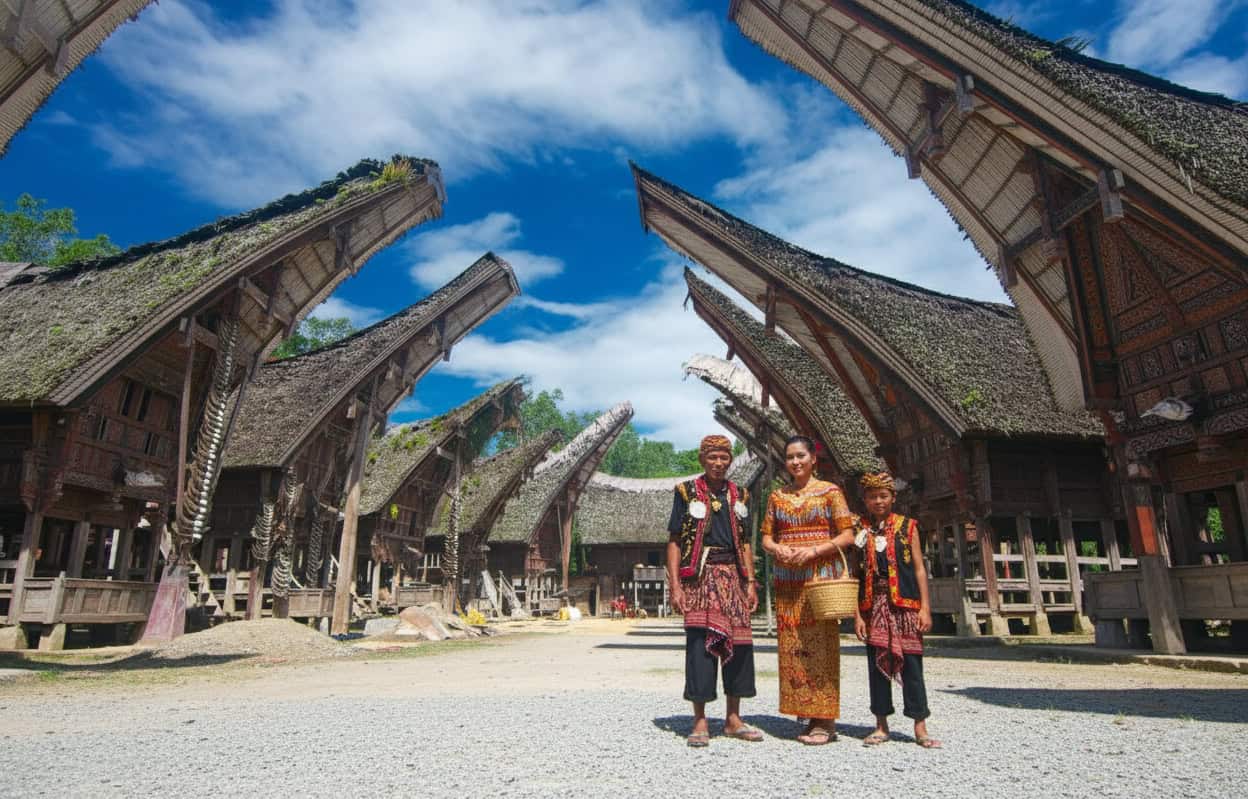
Equally distinctive are the Tongkonan houses, the traditional ancestral homes of the Torajan people. These magnificent structures are instantly recognizable by their dramatically curved, saddle-backed roofs that resemble the prow of a ship. Intricately carved and painted with geometric patterns in red, black, and yellow, Tongkonan houses are not merely dwellings but serve as the center of family life, cultural identity, and social status.
Each Tongkonan is owned by a specific family clan and is passed down through generations. It is the focal point for all ceremonies, including Rambu Solo, and houses the family’s heirlooms and sacred objects. The buffalo horns displayed on the front of a Tongkonan indicate the wealth and status of the family, with more horns signifying greater prestige.
Burial Sites: Cliffs, Caves, and Hanging Graves
Torajan burial practices are as unique as their funeral ceremonies. Instead of burying their dead in the ground, the Torajan people traditionally inter their deceased in various fascinating ways:
- Cliff Graves: Coffins are placed in caves or carved out recesses in steep cliff faces. These are often guarded by tau-tau figures.
- Hanging Graves: For some, coffins are suspended from the side of cliffs, slowly deteriorating over time.
- Baby Graves: Infants who die before teething are buried in holes carved into living trees, believed to allow the child to grow with the tree.
These ancient burial sites, such as Lemo, Londa, and Kambira, are open to visitors and offer a poignant reflection on Torajan beliefs about life, death, and the eternal journey.
Beyond Funerals: Other Cultural Highlights
While funerals are central, Tana Toraja offers other cultural experiences:
- Traditional Villages: Explore villages like Kete Kesu, which boasts a collection of well-preserved Tongkonan houses and rice barns (lumbung), along with a traditional market.
- Weaving and Handicrafts: Witness the creation of traditional Torajan textiles and wood carvings, often imbued with symbolic meanings.
- Stunning Landscapes: The region is characterized by lush green rice paddies, rolling hills, and coffee plantations, perfect for trekking and enjoying the serene natural beauty.
Practical Tips for Visiting Tana Toraja
Best Time to Visit: The dry season (May to October) is generally preferred for travel, though funeral ceremonies often occur during the harvest season (June to September) when families have more resources.
Getting There: The most common way to reach Tana Toraja is by flying to Makassar (UPG) and then taking a bus or private car for the 8-10 hour journey north.
Local Guide: Hiring a local guide is highly recommended to navigate the complex cultural nuances of funeral ceremonies and to gain a deeper understanding of Torajan traditions.
Respectful Conduct: When attending ceremonies, dress modestly, be respectful of local customs, and always ask for permission before taking photographs.
Tana Toraja is a destination that offers a profound and unforgettable cultural immersion. It is a place where the cycle of life and death is celebrated with unparalleled reverence and artistry, inviting visitors to witness a truly unique way of life that has been preserved for centuries amidst the stunning landscapes of Sulawesi.