
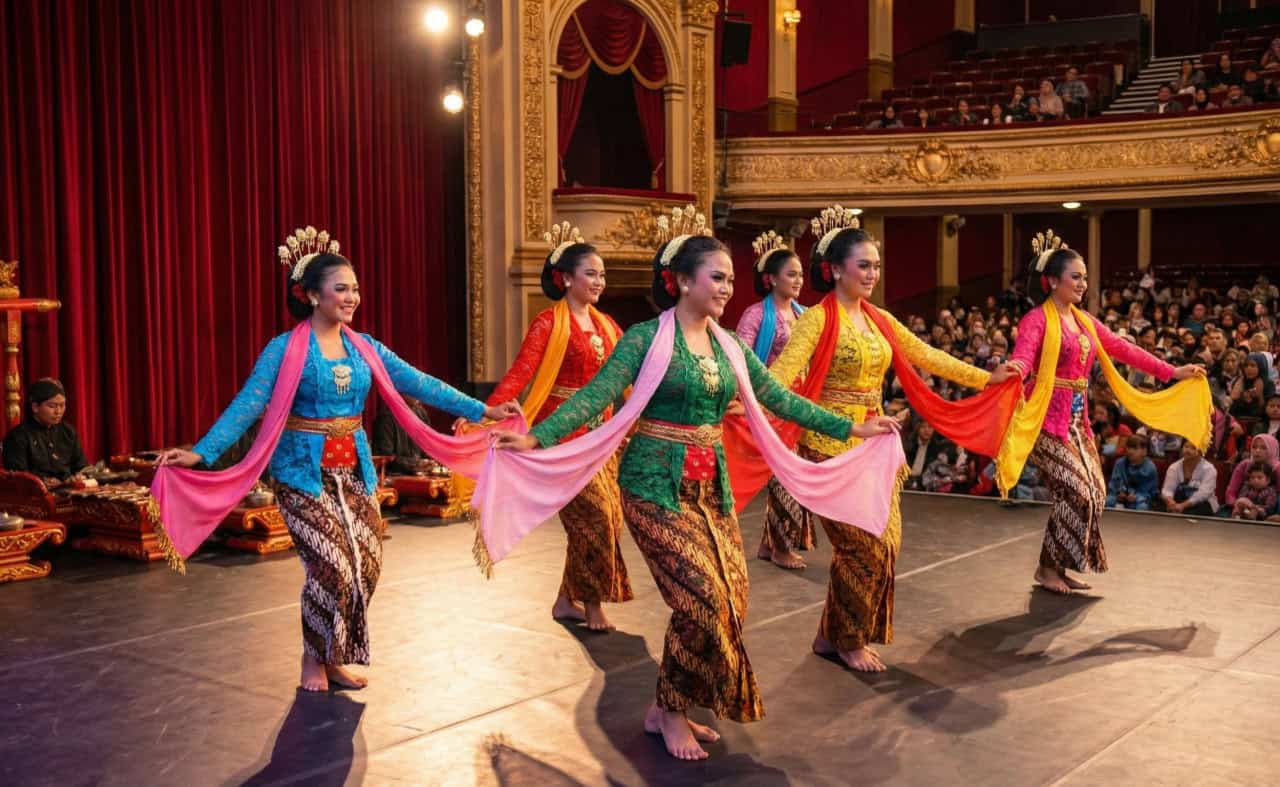
While Bali’s captivating dances, such as Legong, Barong, and Kecak, are world-renowned and often the first image that comes to mind when thinking of Indonesian performing arts, they represent just a fraction of the archipelago’s incredibly rich and diverse dance heritage. Across Indonesia’s thousands of islands, hundreds of ethnic groups have cultivated their own unique dance forms, each imbued with distinct cultural narratives, spiritual meanings, and artistic expressions. These dances are living chronicles of history, belief systems, and social structures, offering a mesmerizing glimpse into the soul of each region.
Saman Dance: The Dynamic Rhythms of Aceh
From the northernmost province of Aceh, particularly among the Gayo ethnic group, emerges the Saman Dance, often dubbed the “Dance of a Thousand Hands.” This highly energetic and synchronized dance is performed by a group of men, typically sitting on their heels or kneeling in tight rows. What makes Saman truly unique is its complete reliance on vocalizations and body percussion; there are no musical instruments involved. Dancers clap their hands, slap their chests, thighs, and the ground, and snap their fingers, creating a complex tapestry of rhythmic sounds.
The Saman dance is traditionally performed to celebrate important occasions, such as the birth of Prophet Muhammad, and to convey moral messages and religious teachings. The movements are incredibly precise and rapid, with dancers moving their upper bodies, heads, and hands in unison, creating a wave-like effect. The lead dancer, or syekh, initiates the movements and chants, which are then followed by the group. Recognized by UNESCO as a Masterpiece of Oral and Intangible Heritage of Humanity, the Saman dance is a powerful testament to communal harmony, discipline, and spiritual devotion.
Jaipongan Dance: The Vibrant Expression of West Java
Moving to West Java, the Jaipongan Dance bursts forth with its vibrant, energetic, and often playful movements. Created in the late 1970s by artist Gugum Gumbira, Jaipongan is a modern traditional dance that draws inspiration from various Sundanese folk arts, including ketuk tilu (a traditional social dance), pencak silat (martial arts), and wayang golek (wooden puppet theatre). It is characterized by dynamic gestures, expressive facial movements, and lively drum beats (kendang).
Jaipongan is typically performed by female dancers, often accompanied by a full gamelan orchestra, though with a more prominent role for the drums. The dance is known for its sensuality, spontaneity, and strong connection to the accompanying music. It quickly gained popularity as a social dance and a form of entertainment, becoming a symbol of Sundanese cultural identity. Jaipongan performances are a joyous celebration of life, showcasing the grace, strength, and vivacity of the dancers.
Other Notable Traditional Dances Across the Archipelago
Indonesia’s dance repertoire extends far beyond these examples, with each region contributing its own distinctive forms:
- Serimpi Dance (Central Java): A highly refined and graceful court dance, traditionally performed by four female dancers in the royal palaces of Yogyakarta and Surakarta. It embodies elegance, tranquility, and often depicts stories from Javanese mythology and history.
- Piring Dance (West Sumatra): The “Plate Dance” of the Minangkabau people, where dancers skillfully balance plates on the palms of their hands while performing intricate footwork and movements, often to the accompaniment of traditional music. It was originally a ritual dance to express gratitude to the gods for a bountiful harvest.
- Gending Sriwijaya Dance (South Sumatra): A welcoming dance from the former Srivijaya kingdom, performed by nine female dancers who gracefully move to traditional music, often carrying golden betel nut containers as offerings to guests.
- Reog Ponorogo (East Java): A spectacular and mystical folk dance featuring a large, heavy mask of a tiger-lion hybrid, often adorned with peacock feathers, which is carried by a single dancer using only their teeth. It is a powerful and dramatic performance, often accompanied by trance-like elements.
- Pendhet Dance (Bali): While I’ve focused on dances beyond Bali, it’s worth noting the Pendhet as a welcoming and offering dance, often performed at the beginning of ceremonies or as a prelude to other Balinese dances.
The Enduring Spirit of Indonesian Dance
These traditional dances are not static relics of the past; they are living, evolving art forms that continue to be performed, taught, and cherished. They serve as vital links to ancestral traditions, communal identity, and spiritual beliefs. For travelers, witnessing these performances offers an unparalleled opportunity to connect with the diverse cultures of Indonesia, to appreciate the intricate artistry, and to feel the pulse of a nation that expresses its soul through movement and rhythm.
Whether it’s the synchronized power of the Saman, the vibrant energy of Jaipongan, or the serene grace of Serimpi, each dance invites audiences to step into a world where history, mythology, and human emotion are beautifully choreographed. Exploring Indonesia’s diverse traditional dances is an enriching journey that reveals the profound artistic and cultural depth of this extraordinary archipelago.