
In stark contrast to the boisterous New Year celebrations found across the globe, Bali observes Nyepi, its most sacred day, with an profound and absolute silence. This unique Hindu holiday, marking the Saka New Year according to the Balinese calendar, is a 24-hour period of introspection, meditation, and self-reflection. From sunrise to sunrise, the entire island of Bali falls silent, its usually bustling streets empty, its skies devoid of aircraft, and its homes dark. Nyepi is not merely a public holiday; it is a powerful spiritual cleansing, a day when the Balinese believe the island itself rests and renews, warding off evil spirits and inviting peace.
The Philosophy Behind the Silence
Nyepi is deeply rooted in the philosophy of Agama Hindu Dharma, the unique form of Hinduism practiced in Bali. It is a day dedicated to Catur Brata Penyepian, four main prohibitions that guide the day of silence:
- Amati Geni (No Fire/Light): This includes refraining from lighting fires, using electricity, or any form of light. It symbolizes self-control and the suppression of worldly desires.
- Amati Karya (No Work): All forms of work and physical activity are forbidden, encouraging introspection and spiritual contemplation.
- Amati Lelungan (No Travel): People are not allowed to leave their homes or compounds, symbolizing a withdrawal from the external world.
- Amati Lelanguan (No Entertainment/Pleasure): Any form of entertainment, music, or personal pleasure is prohibited, fostering a state of quiet reflection.
These prohibitions are observed strictly, transforming the entire island into a sanctuary of stillness. The belief is that by making the island appear deserted, any lingering evil spirits from the previous year will pass over Bali, leaving it cleansed and ready for a fresh start.
The Rituals Leading Up to Nyepi
The profound silence of Nyepi is preceded by a series of vibrant and elaborate ceremonies, each playing a crucial role in the spiritual preparation for the New Year:
- Melasti (Melis or Mekiyis): Several days before Nyepi, the Balinese embark on the Melasti ceremony. Villagers, dressed in traditional white attire, carry sacred effigies and temple relics in colorful processions to the nearest beach or holy water source. This purification ritual aims to cleanse the sacred objects and the human soul from all impurities, drawing positive energy from the ocean, which is considered the source of Amerta (the water of eternal life).
- Tawur Kesanga (Bhuta Yadnya): On the eve of Nyepi, the atmosphere shifts dramatically with the Tawur Kesanga ceremony, a grand ritual of appeasement to the Bhuta Kala (demons and negative forces). This ceremony involves offerings made at crossroads and village centers to ensure cosmic balance and to neutralize negative energies. It culminates in a cacophony of noise, music, and firecrackers, designed to drive away any remaining evil spirits from the island.
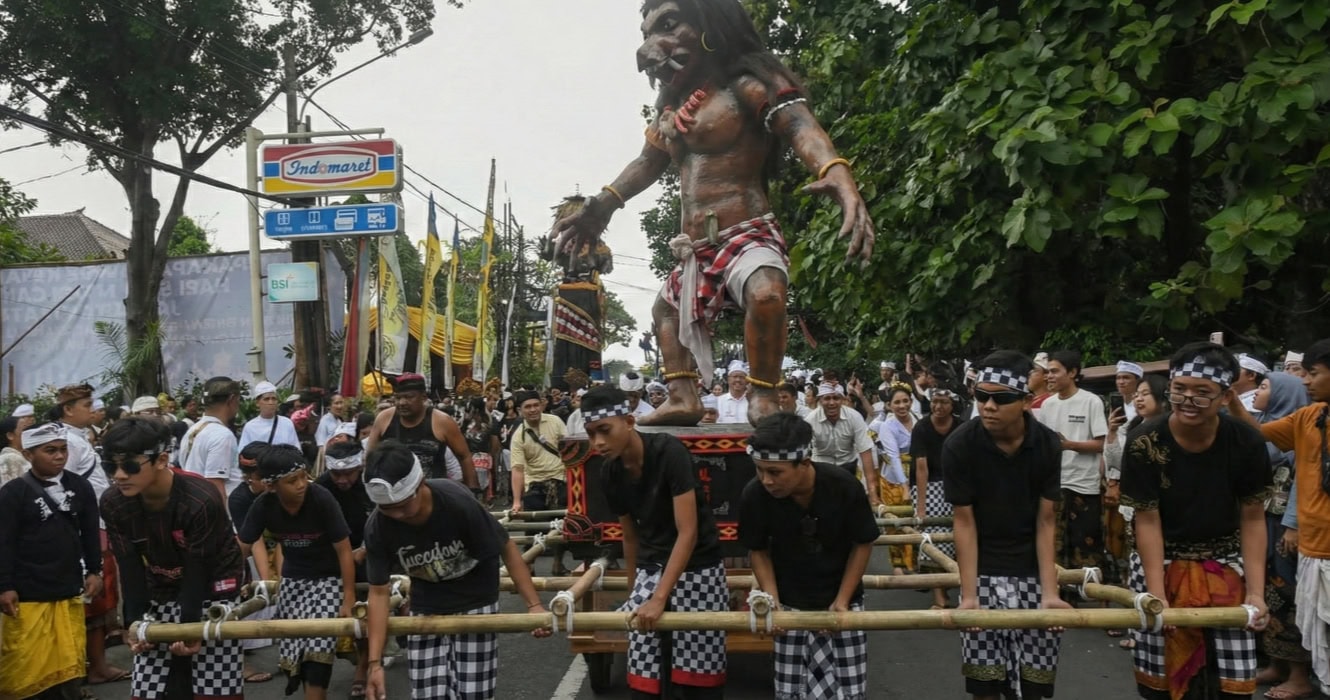
- Ogoh-Ogoh Parade: The most visually spectacular event before Nyepi is the Ogoh-Ogoh parade. Giant, elaborate effigies, often depicting demonic figures from Balinese mythology, are paraded through the streets by groups of young men. These monstrous creations, crafted from bamboo, paper, and styrofoam, symbolize the negative aspects of human nature and the evil spirits that have accumulated over the past year. The parades are boisterous and energetic, filled with music, shouting, and dancing. After the parade, the Ogoh-Ogoh are typically burned in a communal bonfire, symbolizing the purification of the island and the destruction of evil influences, ensuring that Bali is truly clean for the Day of Silence.
The Day of Silence Itself
When Nyepi dawns, the island transforms. The roads are deserted, the airport closes, and even the smallest lights are extinguished. Local watchmen, known as Pecalang, patrol the streets to ensure that the rules of Nyepi are strictly observed. Tourists are expected to respect these customs and remain within their hotel premises, with all hotel activities kept to a minimum and lights dimmed.
For the Balinese, Nyepi is a day for deep spiritual reflection, fasting, and meditation. It is a time to reconnect with oneself, one’s family, and the divine, free from the distractions of the material world. The silence allows for a profound sense of peace to descend upon the island, a rare and precious experience in our increasingly noisy world.
Ngembak Geni: The Day After
The silence of Nyepi is broken at sunrise on the following day, known as Ngembak Geni. This day is dedicated to forgiveness, family visits, and social gatherings. Balinese Hindus visit relatives and friends to ask for forgiveness and perform religious rituals together. It is a day of renewal, where the cleansed island and its people begin the new year with a fresh spirit and harmonious intentions.
Experiencing Nyepi as a Traveler
For travelers, experiencing Nyepi can be a unique and memorable part of a Bali trip. It offers a rare opportunity to witness a culture deeply committed to its spiritual practices and to participate, albeit passively, in a profound act of collective introspection. While it requires adjusting travel plans (no flights in or out, no movement on the island), the quietude and the preceding vibrant ceremonies offer an unparalleled cultural immersion. It’s a chance to slow down, reflect, and appreciate the spiritual heart of Bali.
Nyepi is a powerful testament to the Balinese way of life, a day that underscores their unwavering commitment to spiritual balance and harmony. It is a reminder that true celebration sometimes lies not in noise and revelry, but in profound silence and introspection, allowing for a deeper connection to oneself and the universe.