
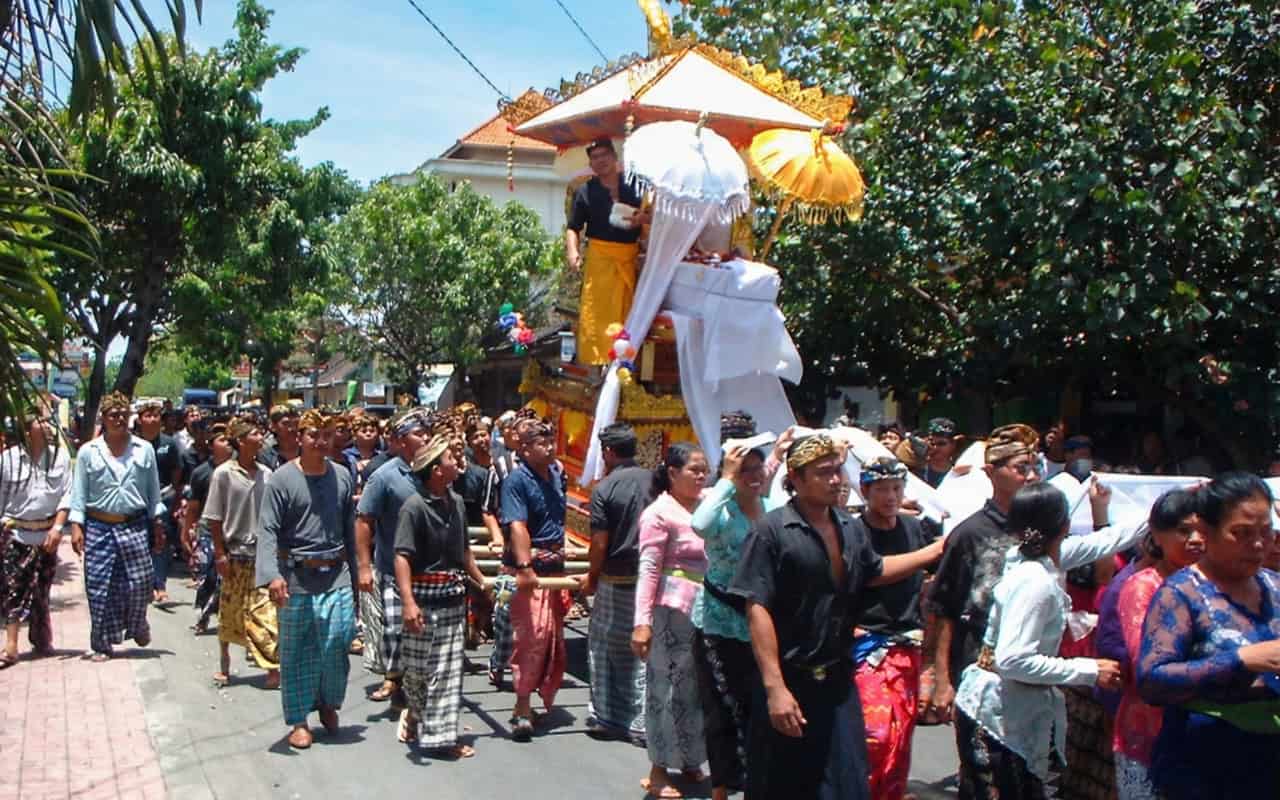
In Bali, the cycle of life and death is not viewed with sorrow and despair, but with a profound sense of acceptance, ritual, and even joy. The most significant and visually spectacular manifestation of this philosophy is Ngaben, the Balinese Hindu cremation ceremony. Far from a somber funeral, Ngaben is a vibrant, elaborate, and often festive event, a spiritual journey designed to release the soul (Atma) from its earthly body, allowing it to ascend to a higher realm and eventually achieve reincarnation or moksha (liberation). To witness an Ngaben ceremony is to gain a deep insight into the Balinese understanding of life, death, and the eternal spiritual journey.
The Philosophy Behind the Flames
Ngaben, also known as Pitra Yadnya (sacred ritual for ancestors) or Pelebon (royal cremation), is rooted in the Balinese Hindu belief that the physical body is merely a temporary vessel for the soul. Upon death, the soul is believed to be trapped within the body, and cremation is the essential ritual to purify the body and free the soul, enabling its spiritual journey. The fire is seen as a sacred medium that cleanses and transforms, facilitating the soul’s passage to the afterlife.
Unlike many cultures where death is mourned, in Bali, Ngaben is a celebration of life and a joyful send-off for the deceased. While there is natural grief, the overarching sentiment is one of duty and spiritual assistance to the departed, ensuring their smooth transition. The community plays a vital role, coming together to support the grieving family and participate in the elaborate preparations.
The Elaborate Preparations: A Labor of Love and Devotion
Ngaben ceremonies are often costly and require extensive preparation, which can sometimes mean that bodies are temporarily buried for weeks, months, or even years until the family can afford a proper ceremony, or until a mass cremation (Ngaben Massal) is organized. The preparations involve several key stages:
- Memukur (Purification): Before the main ceremony, the deceased’s body (or symbolic effigy if buried) undergoes a series of purification rituals. The body is washed with holy water, dressed in traditional Balinese attire, and wrapped in white fabric. Prayers and offerings are made to cleanse the physical remains.
- Building the Bade and Lembu/Singa: A towering, multi-tiered cremation tower (bade) is constructed, often resembling a temple or a pagoda. This elaborate structure, made of wood, bamboo, and paper, will carry the body to the cremation ground. Alongside the bade, a sarcophagus in the shape of a bull (lembu for commoners) or a lion (singa for royalty) is also built. These animal effigies are where the body will ultimately be placed for cremation.
- Offerings: Throughout the preparation and ceremony, countless intricate offerings (banten) are meticulously prepared. These offerings, made from flowers, fruits, rice cakes, and other symbolic items, are crucial for appeasing deities, honoring ancestors, and ensuring the success of the ritual.
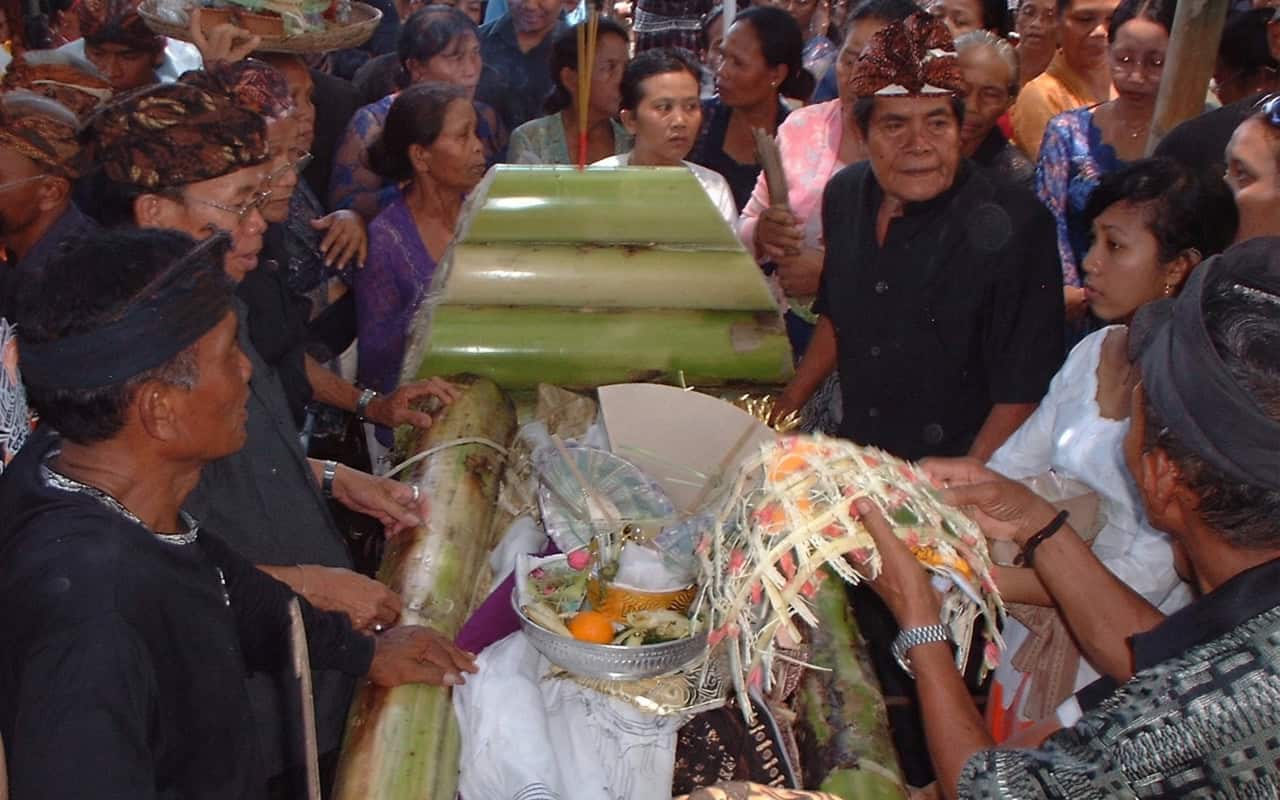
The Procession: A Journey to Liberation
The day of Ngaben is a spectacle of color, sound, and communal energy. The procession from the family home to the cremation ground is a highlight, designed to confuse evil spirits and prevent them from interfering with the soul’s journey:
- The Bade and Lembu/Singa: The deceased’s body, placed within the animal sarcophagus, is then hoisted onto the towering bade. Hundreds of men from the community carry the heavy bade on their shoulders, often spinning it vigorously at crossroads to disorient any lingering spirits.
- Gamelan Orchestra: A vibrant gamelan orchestra accompanies the procession, its rhythmic music adding to the festive atmosphere and guiding the participants.
- Family and Community: Dressed in traditional attire, family members and villagers follow the procession, carrying offerings and participating in prayers and chants. The atmosphere, while respectful, is often joyous, reflecting the belief that the soul is moving towards a better existence.
The Cremation: Releasing the Soul
Upon arrival at the cremation ground, the body (still within the animal sarcophagus) is carefully transferred from the bade to the pyre. More prayers and rituals are performed by priests (pemangku or pedanda). Finally, the pyre is set alight. The flames are seen as a sacred purification, transforming the physical remains into ash and liberating the soul.
Family members and onlookers watch as the fire consumes the structures, a poignant yet hopeful moment. The burning of the body is not an act of destruction but a necessary step in the soul’s journey, a release from worldly attachments.
Nganyut and Mukur: The Final Stages
After the cremation, the ashes (abu) are collected and taken to the sea or a sacred river (Nganyut ceremony) and scattered. This act symbolizes the return of the elements to their origin and the complete release of the soul from its earthly ties. The water carries the soul to the ocean, believed to be the source of all life and a pathway to the divine.
Some time later, often months or even years after the cremation, a final ceremony called Mukur (or Nyekah) is performed. This elaborate ritual aims to elevate the purified soul to the realm of the ancestors or deities, ensuring its proper place in the spiritual hierarchy and preparing it for eventual reincarnation.
Witnessing Ngaben as a Traveler
For visitors, witnessing an Ngaben ceremony is a profound cultural privilege. While it is a public event, it is essential to approach it with the utmost respect and sensitivity:
- Dress Modestly: As with temple visits, wear appropriate attire that covers your shoulders and knees.
- Maintain Distance: Observe from a respectful distance and avoid getting in the way of the procession or rituals.
- Ask Permission for Photos: Always ask permission before taking photographs, especially close-ups of individuals or sensitive moments.
- Be Quiet and Respectful: While the atmosphere can be lively, remember it is a sacred ceremony. Avoid loud conversations or disruptive behavior.
- Do Not Interfere: Never attempt to participate in the rituals unless explicitly invited by the family.
Ngaben is a powerful testament to the Balinese philosophy of life and death, a unique cultural expression that transforms grief into a vibrant celebration of spiritual passage. It is a reminder that even in death, there is beauty, purpose, and an enduring connection to the divine, making it one of the most moving and unforgettable experiences Bali has to offer.