
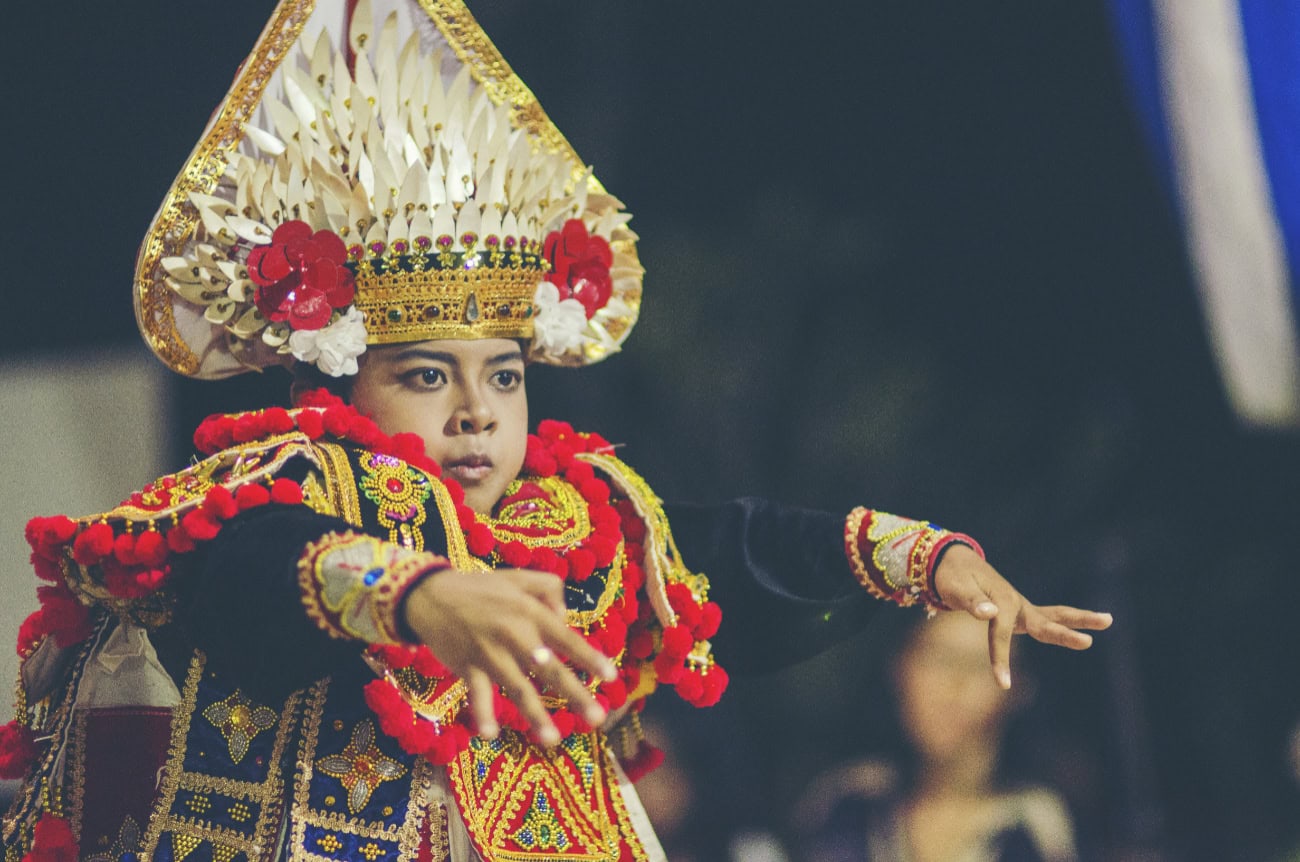
Bali, the enchanting “Island of the Gods,” is a realm where art, religion, and daily life are inextricably intertwined. Nowhere is this more evident than in its traditional dances, which are far more than mere performances; they are living prayers, ancient narratives, and vibrant expressions of the island’s spiritual heart. Balinese dance is an ancient art form, passed down through generations, characterized by intricate finger movements, expressive facial gestures, and precise footwork, all set to the mesmerizing rhythms of the gamelan orchestra. To witness a Balinese dance is to glimpse into the soul of the island, where myths, legends, and devotion come alive.
The Sacred and the Secular: Three Genres of Balinese Dance
Balinese traditional dances are broadly categorized into three genres, reflecting their purpose and context:
- Wali (Sacred Dances): These are the most sacred and are performed exclusively in temple courtyards during religious ceremonies. They are not meant for entertainment but as offerings to the gods and ancestors. Examples include the Sanghyang Dedari (trance dance) and Rejang (sacred offering dance).
- Bebali (Semi-Sacred Dances): These dances serve both a ceremonial and entertainment purpose. They are often performed in the outer courtyards of temples or during public festivals. The Topeng (mask dance) and Gambuh (classical dance-drama) fall into this category.
- Balih-balihan (Entertainment Dances): These are performed for social enjoyment and to welcome guests, often seen in tourist venues, hotels, and public spaces. While primarily for entertainment, they often retain spiritual elements and tell stories from Hindu epics. The Legong, Barong, and Kecak dances are prominent examples.
Iconic Balinese Dances and Their Stories
Each Balinese dance tells a story, often drawn from Hindu epics like the Ramayana and Mahabharata, or from local folklore. The dancers, through their stylized movements, elaborate costumes, and intense facial expressions, embody gods, demons, heroes, and mythical creatures.
1. Legong: The Dance of Celestial Nymphs
Legong is arguably the most refined and visually captivating of all Balinese dances. Traditionally performed by young girls who have not yet reached puberty, it is characterized by intricate finger movements, complicated footwork, and highly expressive facial gestures, particularly of the eyes. The dancers are adorned in exquisite costumes, including golden headdresses, vibrant silks, and intricate jewelry.
The most common form, Legong Keraton, often tells the story of King Airlangga and his abduction of Princess Rangkesari. The dance is a delicate balance of grace and dynamism, with the dancers moving in perfect synchronicity, often accompanied by a condong (attendant) who introduces the narrative. The music is typically a soft, melodic gamelan, allowing the subtle movements of the dancers to take center stage.
2. Barong: The Eternal Battle of Good vs. Evil
The Barong dance is a dramatic and powerful performance that symbolizes the eternal struggle between good and evil. The central character is Barong, a mythical lion-like creature with a benevolent spirit, representing good. He is pitted against Rangda, the demon queen, who embodies evil. The dance often involves a priest sprinkling holy water, and sometimes dancers can enter a trance-like state, demonstrating the spiritual intensity of the performance.
The Barong costume is elaborate, often made of carved wood, mirrors, and real animal hair, requiring two dancers to operate. The narrative usually culminates in a battle where Barong triumphs over Rangda, restoring balance. This dance is a powerful representation of the Balinese belief in cosmic duality and the constant need to maintain harmony.
3. Kecak: The Fire Dance and Monkey Chant
The Kecak dance is perhaps the most unique and mesmerizing of Balinese performances, often referred to as the “monkey chant” or “fire dance.” Performed by a large circle of bare-chested men, typically numbering 100 or more, the Kecak is distinctive because it does not use musical instruments. Instead, the rhythmic chanting of “cak-cak-cak” provides the entire musical accompaniment, creating a hypnotic and powerful soundscape.
The dance dramatizes episodes from the Ramayana, particularly the abduction of Sita by Ravana and the efforts of Rama, aided by the monkey army led by Hanuman, to rescue her. The men’s synchronized movements and vocalizations create a living tableau, with the central characters performing within the circle. Often, a fire trance dance is incorporated, adding to the spectacle and spiritual intensity.
4. Topeng: The Masked Narrators
Topeng (mask dance) is a highly revered form of Balinese dance where performers wear elaborate masks to portray various characters, from noble kings and wise priests to mischievous clowns and powerful demons. The dancer, often a single individual, must master the art of switching between characters, using different masks, voices, and body language. The masks themselves are considered sacred objects, imbued with spiritual power.
Topeng performances often recount historical narratives, ancestral stories, or moral tales, offering insights into Balinese values and history. The dance combines elements of drama, comedy, and spiritual ritual, making it a rich and engaging experience.
The Gamelan Orchestra: The Soul of Balinese Music
No Balinese dance is complete without the accompaniment of the gamelan orchestra. This traditional ensemble, primarily composed of percussive instruments like gongs, metallophones, and drums, creates a complex and layered sound that is both vibrant and deeply spiritual. The music is meticulously choreographed to the dance movements, guiding the dancers and enhancing the emotional depth of the narrative. The intricate melodies and interlocking rhythms of the gamelan are as much a part of the performance as the dancers themselves.
Costumes and Makeup: A Visual Feast
Balinese dance costumes are a visual feast, characterized by their richness, intricate details, and vibrant colors. Dancers are adorned with gilded fabrics, elaborate headdresses, and sparkling jewelry, often representing the divine or royal status of their characters. Makeup is also an essential element, with stylized facial painting enhancing expressions and transforming the dancers into their mythical roles.
Experiencing Balinese Dance
For visitors to Bali, there are numerous opportunities to experience these captivating performances. Many temples, cultural centers, and tourist venues host nightly shows, particularly in areas like Ubud, Denpasar, and Sanur. While tourist performances may be adapted for a wider audience, they still retain the essence and beauty of the traditional art form. Attending a dance performance is not just an evening’s entertainment; it is an immersive cultural experience that offers a deeper understanding of Bali’s spiritual heritage and artistic prowess.
Traditional Balinese dance is a living testament to the island’s rich cultural identity. It is a dynamic art form that continues to evolve while faithfully preserving its ancient roots, offering a profound and unforgettable glimpse into the heart and soul of Bali.