
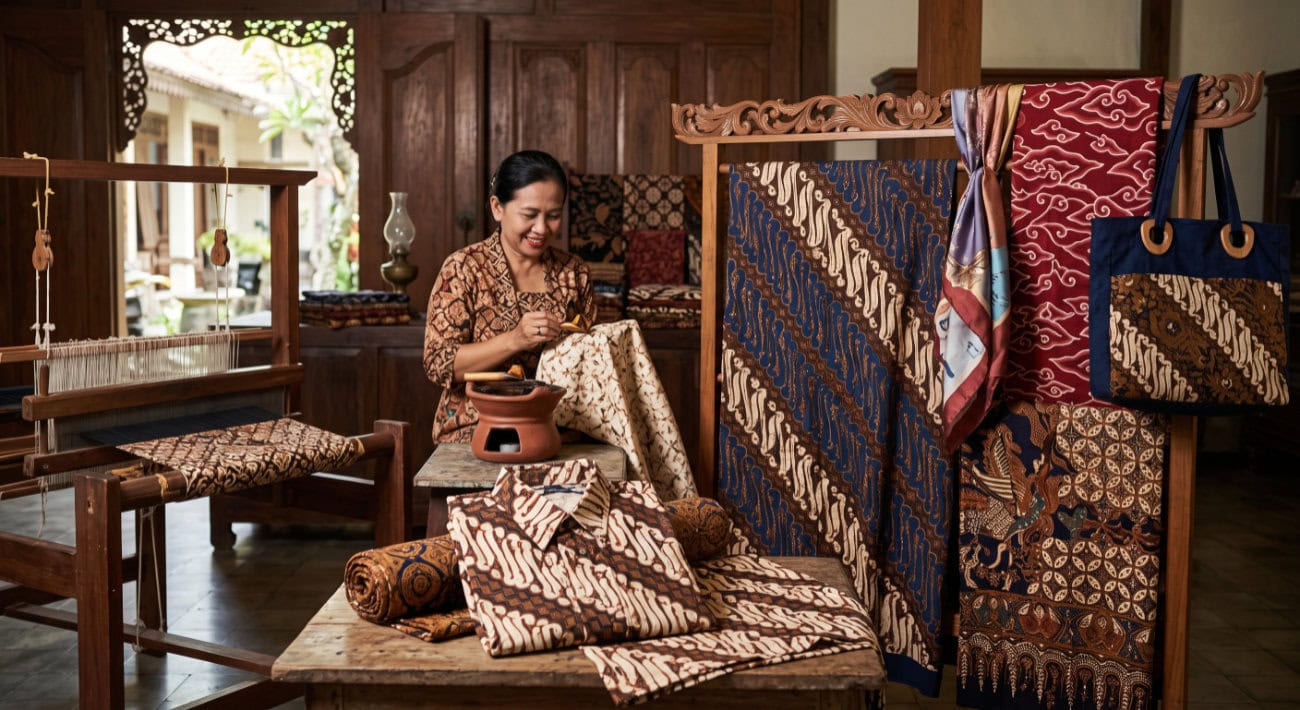
Batik, a traditional textile art form, is one of Indonesia’s most profound cultural treasures. Far more than just a method of decorating cloth, Batik is a sophisticated craft that intertwines intricate techniques, symbolic patterns, and deep philosophical meanings. Recognized by UNESCO in 2009 as a Masterpiece of Oral and Intangible Heritage of Humanity, Indonesian Batik permeates the lives of its people, from ceremonial garments to everyday wear, telling stories and reflecting the rich tapestry of the archipelago’s history and beliefs. To understand Batik is to understand a significant part of Indonesia’s soul.
A History Woven Through Time
The origins of Batik can be traced back over a thousand years, with evidence suggesting its presence in ancient Egypt, India, and China. However, it was in Indonesia, particularly on the island of Java, that Batik reached its pinnacle of artistic expression and cultural significance. The word “Batik” itself is believed to be derived from the Javanese word “tik,” which means to dot, or “amba” (to write) and “titik” (dot), referring to the intricate dotting technique used in its creation.
Historically, Batik was a craft primarily practiced by Javanese royalty and nobility, with specific patterns reserved for the aristocracy. The intricate process and the time-consuming nature of its creation made it a symbol of status and refinement. Over centuries, the art spread beyond the palace walls, evolving with regional variations in motifs, colors, and techniques across different islands of Indonesia, including Sumatra, Kalimantan, and Sulawesi.
The Meticulous Process: Wax-Resist Dyeing
The creation of Batik is a meticulous, multi-stage process based on the principle of wax-resist dyeing. It is a labor of love that requires patience, precision, and artistic skill. The main steps involve:
- Preparation: The process begins with a piece of finely woven cotton or silk fabric, which is thoroughly cleaned and sometimes treated to ensure optimal dye absorption.
- Pattern Drawing (Membatik): The artist first sketches the desired pattern onto the fabric, often with a pencil. Then, using a specialized tool called a canting (a small copper container with a spouted nib, resembling a pen), molten wax is carefully applied to the areas of the fabric that are to remain undyed. This is known as batik tulis (hand-drawn batik) and is the most traditional and time-consuming method. For more repetitive patterns, a copper stamp called a cap (pronounced “chap”) is used, a technique known as batik cap (stamped batik).
- Dyeing: Once the wax is applied, the fabric is immersed in a dye bath. The waxed areas resist the dye, while the unwaxed areas absorb the color. This step can be repeated multiple times, with new layers of wax applied and different colors of dye used, to create complex multi-colored designs. Each color requires a separate waxing and dyeing process.
- Wax Removal: After the final dyeing, the wax is removed by boiling the fabric in hot water. This reveals the intricate patterns and colors that were protected by the wax, creating the characteristic crackle effect often seen in traditional Batik.
- Finishing: The fabric is then washed and dried, ready to be transformed into clothing, sarongs, wall hangings, or other textile products.
Each piece of hand-drawn Batik is unique, bearing the subtle imperfections and artistic nuances that distinguish it as a handcrafted masterpiece.
Symbolic Patterns and Their Meanings
Batik patterns are not merely decorative; they are imbued with deep philosophical, spiritual, and cultural meanings. Many motifs are inspired by nature, mythology, and daily life, reflecting the values and beliefs of the communities that create them. Some common patterns and their significance include:
Parang Rusak: One of the oldest and most sacred motifs, often depicting a wavy, sword-like pattern. Traditionally reserved for royalty, it symbolizes power, strength, and the struggle between good and evil.
Kawung: A pattern of intersecting circles, resembling the cross-section of a palm fruit. It symbolizes wisdom, justice, and purity, and was historically worn by the royal family.
Truntum: A pattern of small, star-like flowers. It symbolizes loyalty, love, and fertility, often worn by parents of the bride and groom during wedding ceremonies.
Semen: A broad category of patterns featuring tendrils, leaves, and mythical creatures. “Semen” means “budding” or “growing,” symbolizing fertility, growth, and the cycle of life.
Mega Mendung: A cloud motif, particularly famous in Cirebon Batik. It symbolizes the sky, rain, and fertility, often depicted in shades of blue.
Animal Motifs: Dragons, birds (like the Garuda, a mythical eagle), and other animals often carry symbolic meanings related to protection, prosperity, or spiritual power.
The choice of Batik pattern can signify social status, age, occasion, or even a prayer for good fortune, making each piece a narrative in itself.
Batik in Modern Indonesian Life
Today, Batik continues to be a vibrant and integral part of Indonesian culture. It is worn for formal occasions, such as weddings and official events, as well as for everyday wear. Many schools and government offices have designated days when employees are encouraged to wear Batik. The art form has also found its way into contemporary fashion, with designers incorporating Batik into modern clothing and accessories, ensuring its relevance and appeal to new generations.
For travelers, Batik offers a unique souvenir and a tangible connection to Indonesian heritage. Visitors can explore Batik workshops, particularly in cities like Yogyakarta and Solo, to witness the intricate process firsthand and even try their hand at applying wax with a canting. Markets and specialized Batik stores offer a wide range of products, from traditional hand-drawn pieces to more affordable stamped varieties.
Preserving a Living Tradition
The recognition of Indonesian Batik by UNESCO has brought renewed attention to the importance of preserving this living heritage. Efforts are underway to ensure that the traditional skills and knowledge are passed down to future generations, safeguarding an art form that is not only aesthetically beautiful but also deeply meaningful. Batik is a testament to the enduring creativity and spiritual depth of the Indonesian people, a textile art that continues to tell stories, connect communities, and celebrate the rich cultural identity of the archipelago. the archipelago. archipelago.